





KAST Card explained (2026): fees, cashback, limits and who it's for
KAST turns a stablecoin balance into a Visa card that works in 170+ countries. We checked the tiers, fees, deposit networks and referral offer against KAST's numbers in October 2026. The free card is good, and the paid tiers only pay off if you spend a lot. The costs sit in currency conversion and ATM withdrawals.

What is the KAST Card?
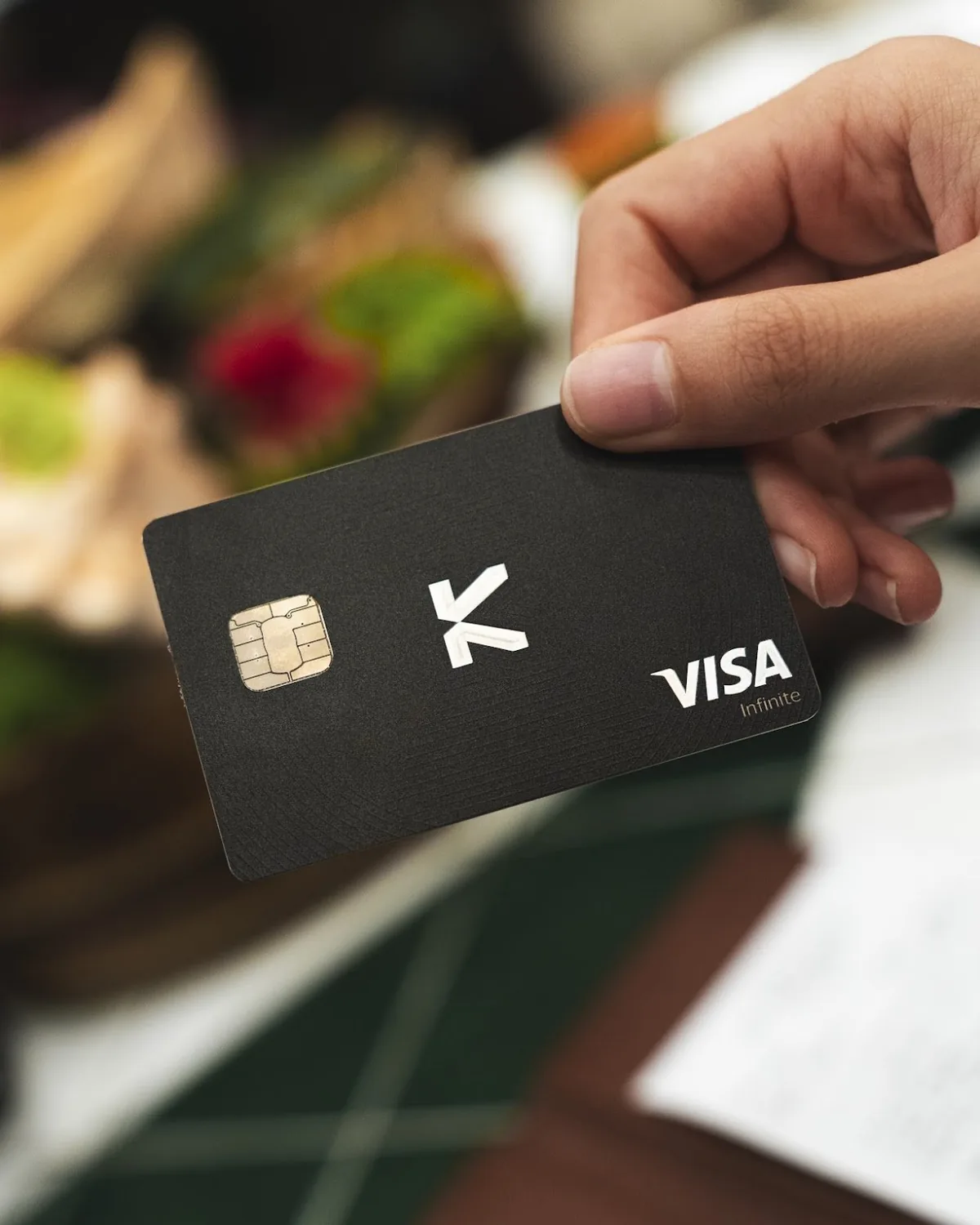
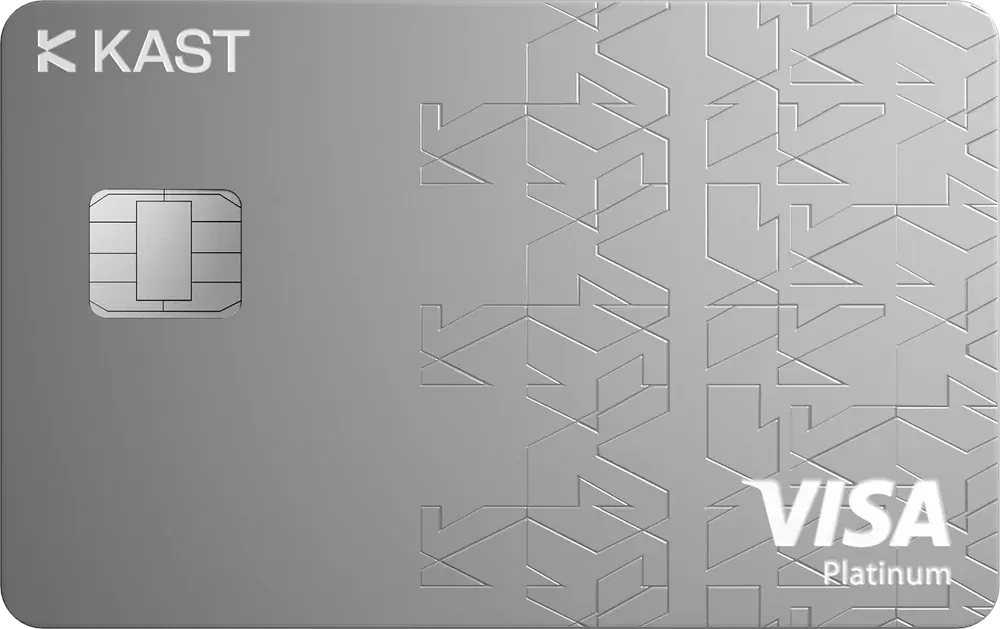
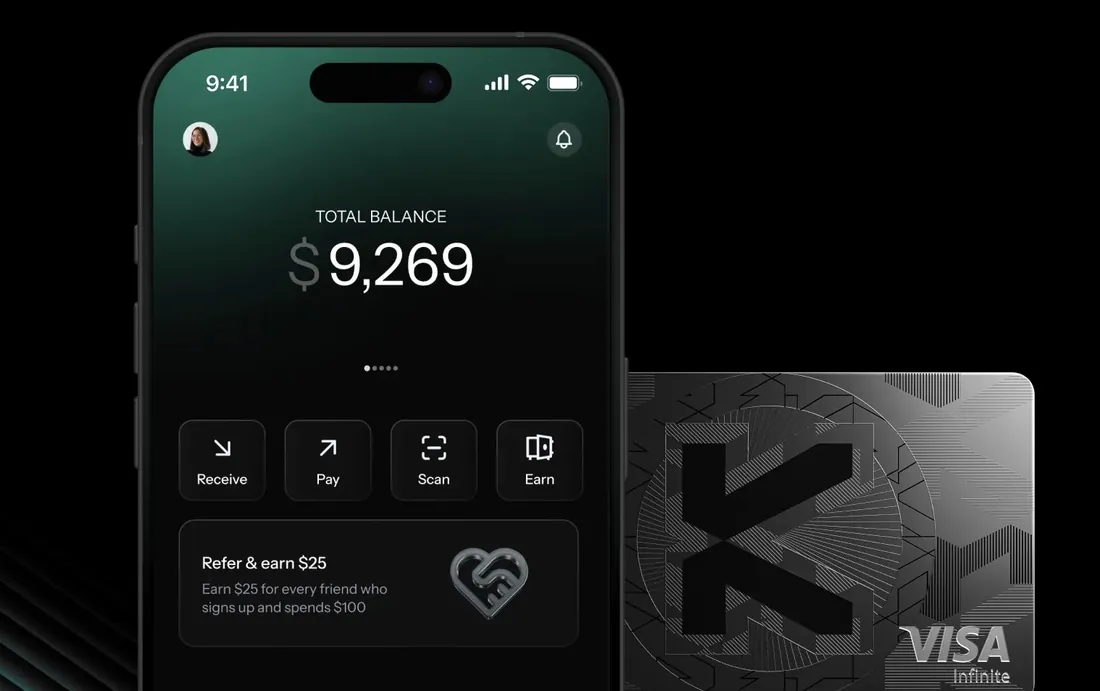
KAST is a financial technology company that pairs a stablecoin account with a Visa card. It is not a bank. You hold USDT or USDC (PYUSD and RLUSD work too), and the card spends from that balance at more than 150 million merchants. The shop just sees a Visa card.
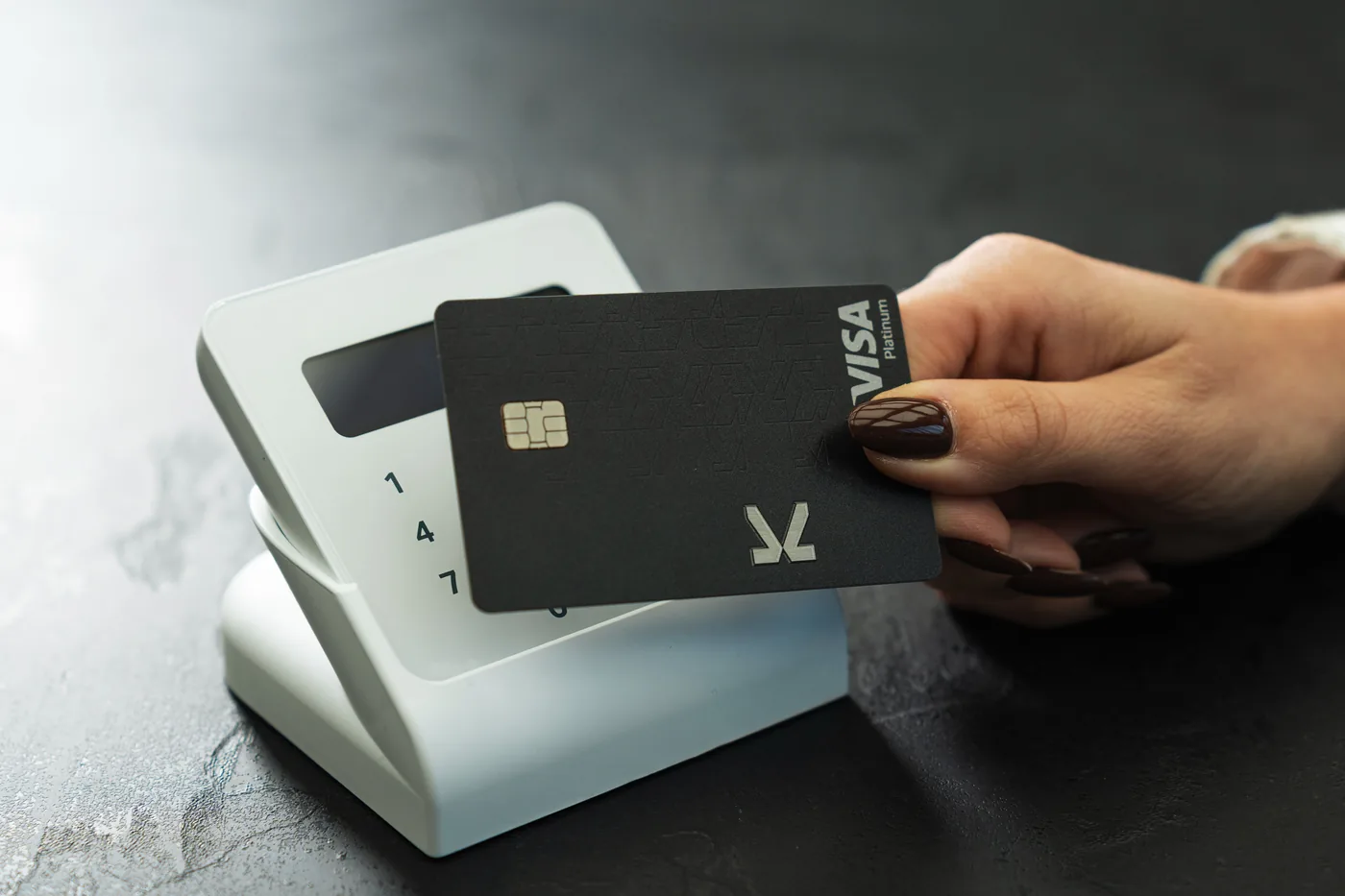
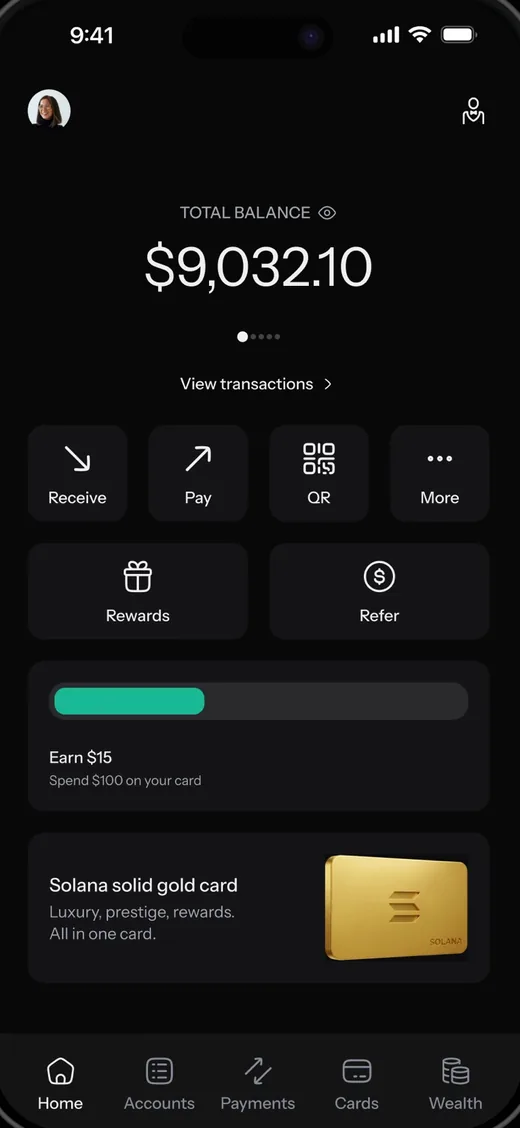
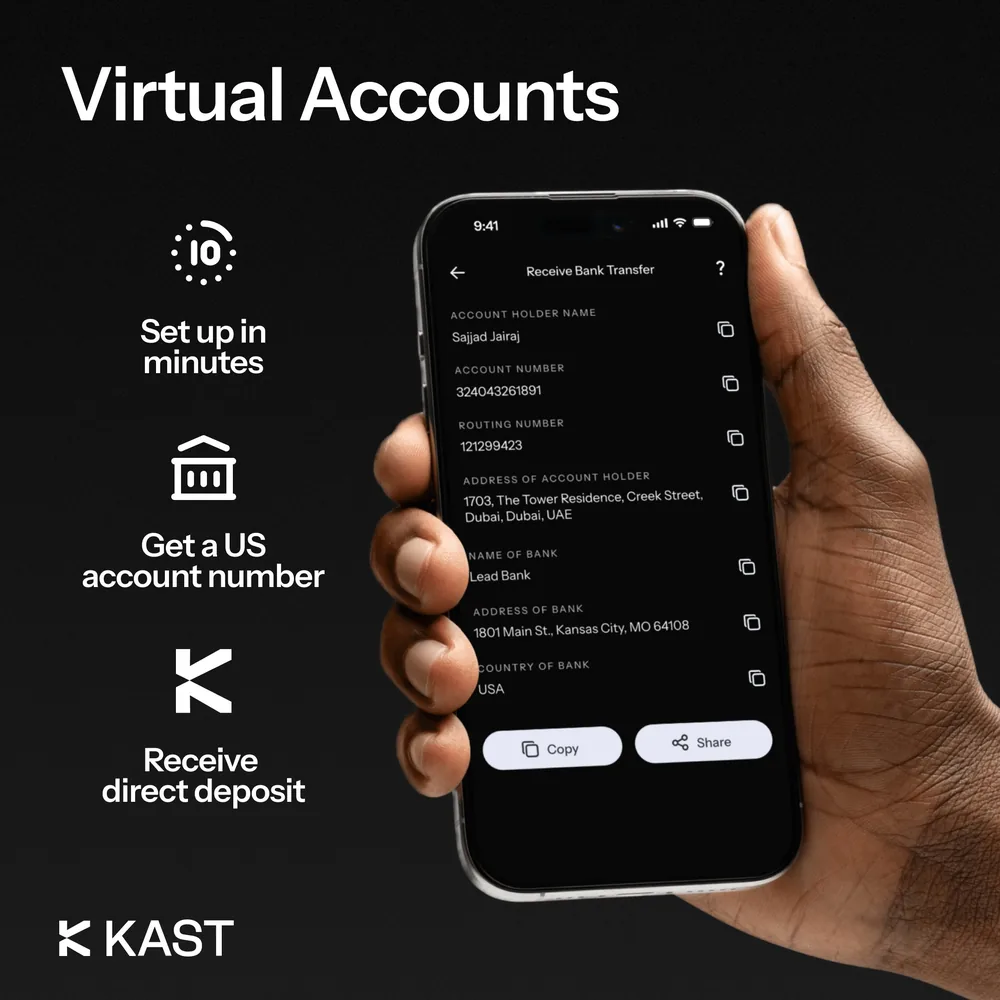
The app also comes with a Kast Global USD Account that has its own account and routing number, plus US and EU details for ACH, SEPA and wire transfers. So it is closer to a stablecoin neobank than to the crypto cards of a few years ago.
It makes the most sense if your money already lives on-chain: you get paid in USDC, you trade, or you travel and want one dollar balance that works abroad.
How the KAST Card works
The card is pre-funded. It spends the stablecoins you have deposited and nothing more, so there is no credit line to repay and no bill at the end of the month. Some card terminals ask whether to run it as debit or credit. KAST routes payments as a secured card, so picking "Credit" is fine.
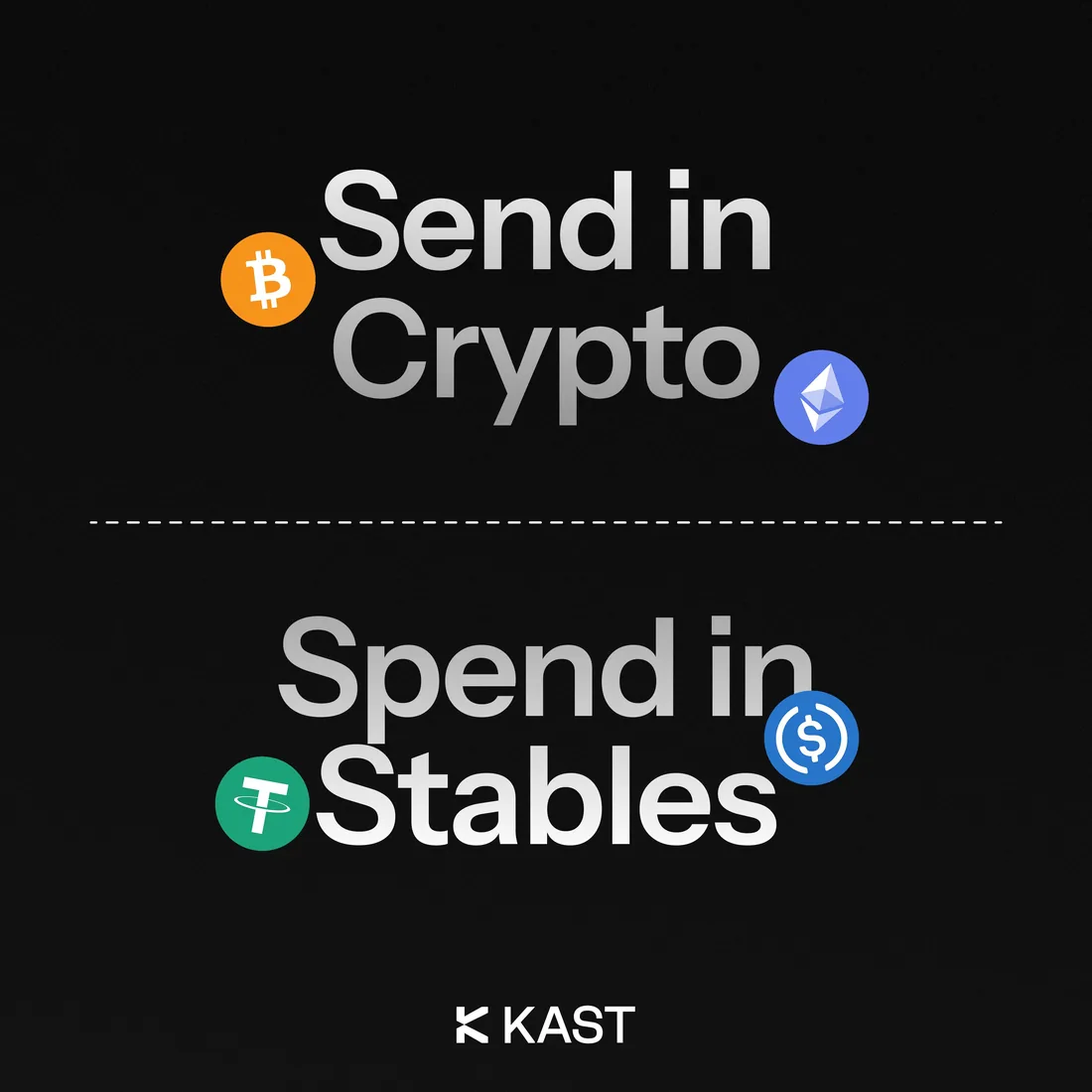
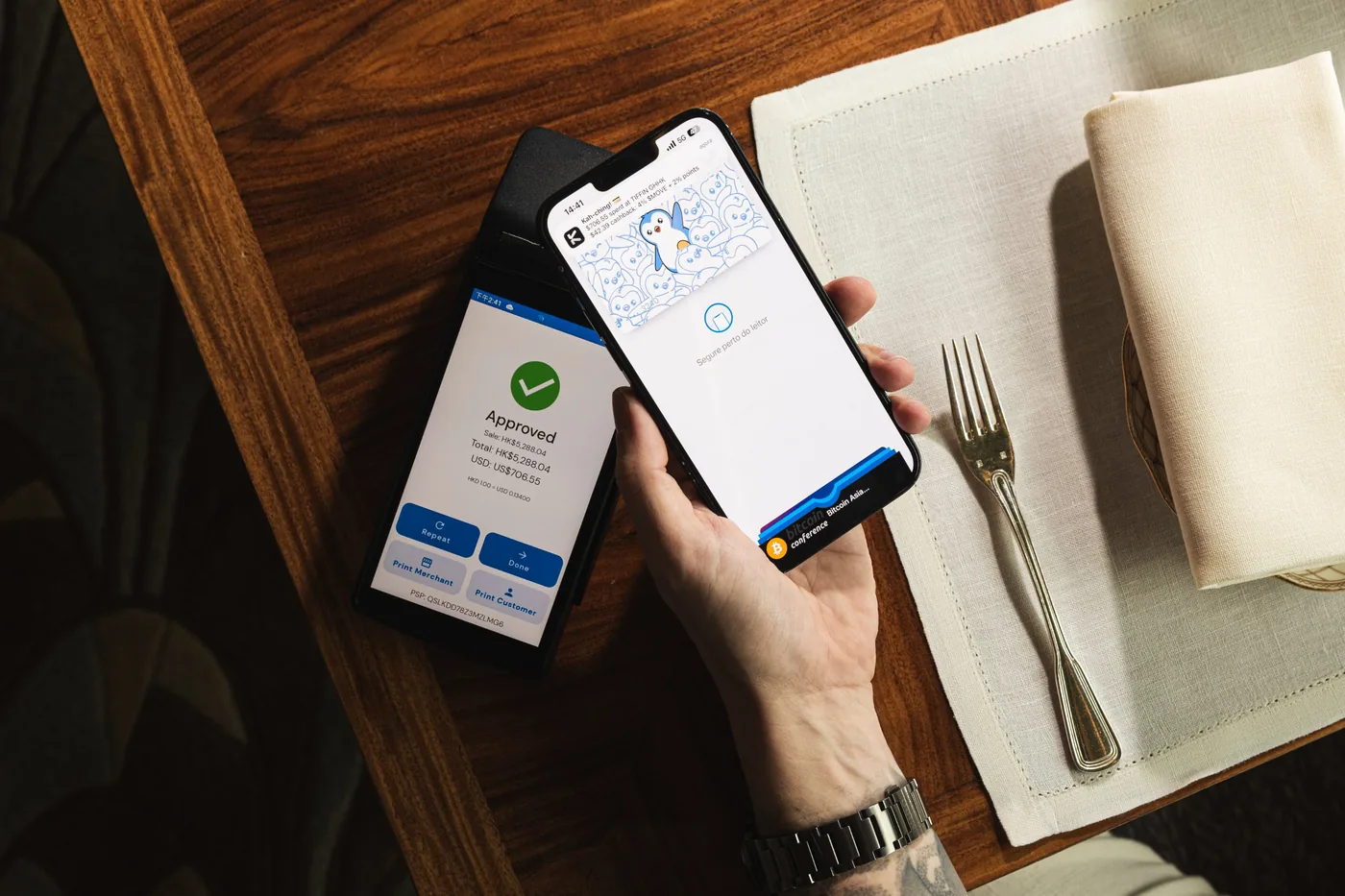
When you pay in another currency, the merchant charges in its own money and KAST converts from your USD balance at checkout. Dollar purchases have no FX fee. Everything else costs 0.5% to 1.75%, depending on where you live and where you spend, and the app shows the rate before you confirm.
Nothing gets sold at the till, because the dollars you spend are the stablecoins already in your balance.
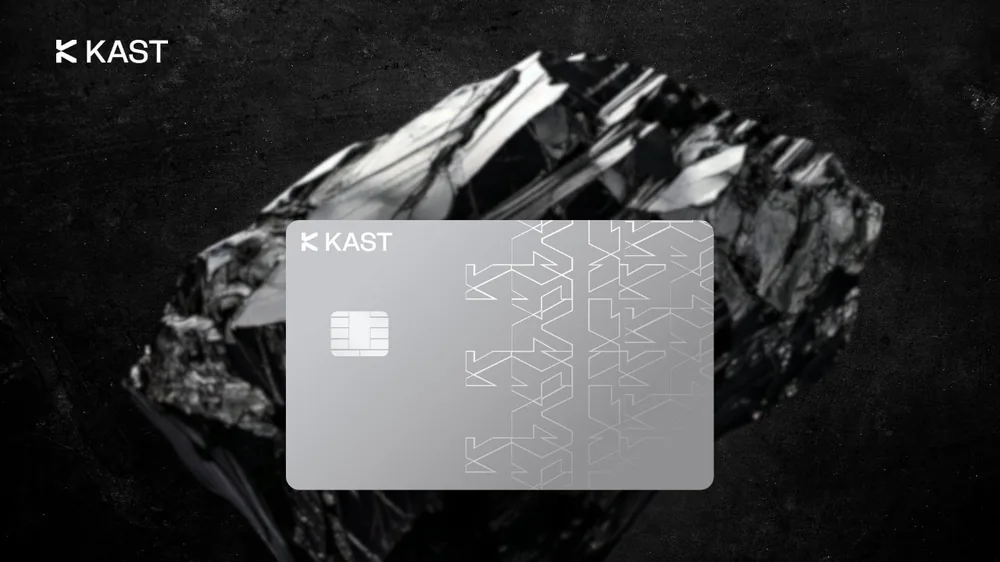
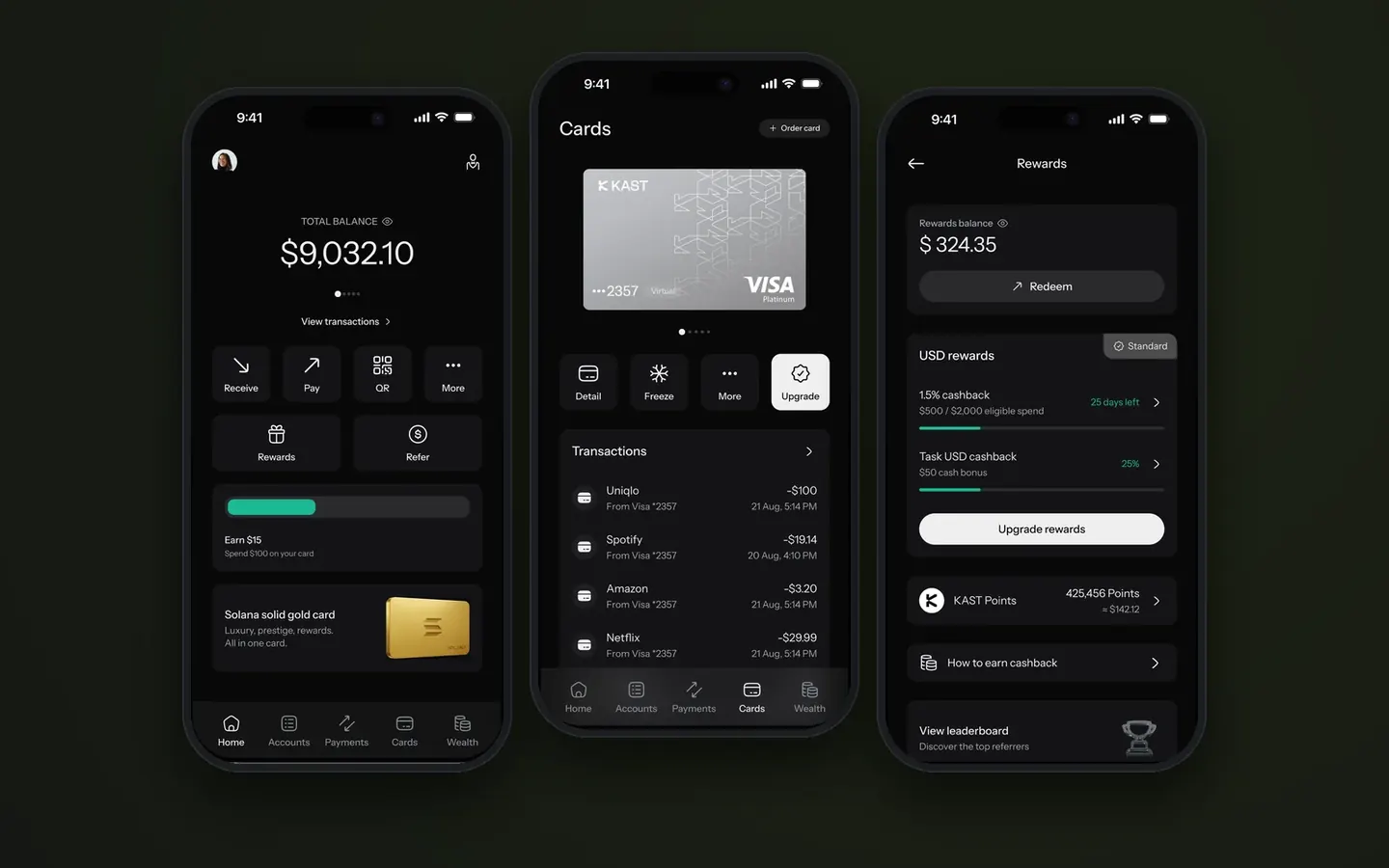
The Kast Virtual Card shows up as soon as your ID check clears, and you can add it to Apple Pay or Google Pay straight away. The plastic one comes later by post.
KAST Card tiers and cashback: Standard, Premium and Private
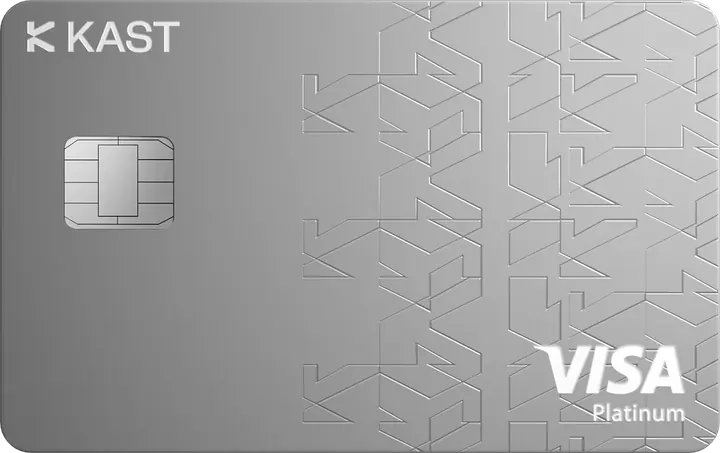
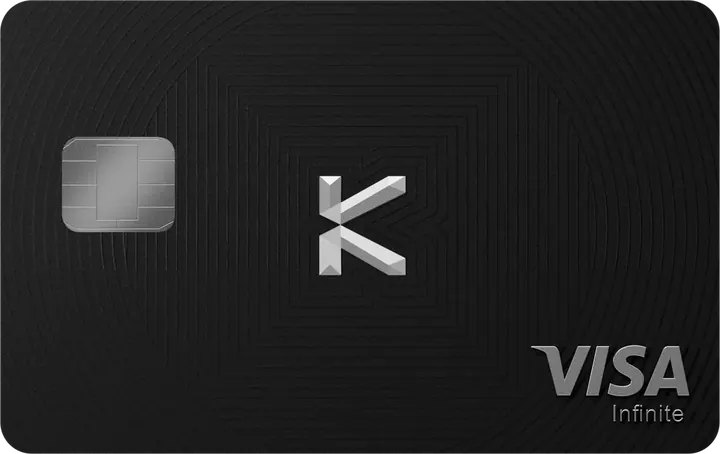
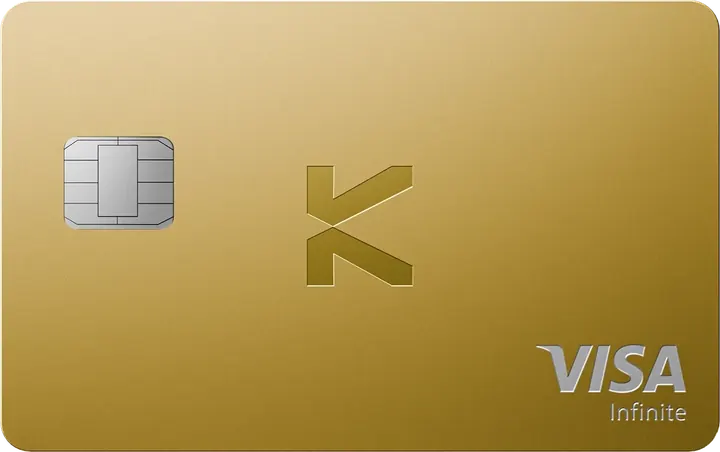
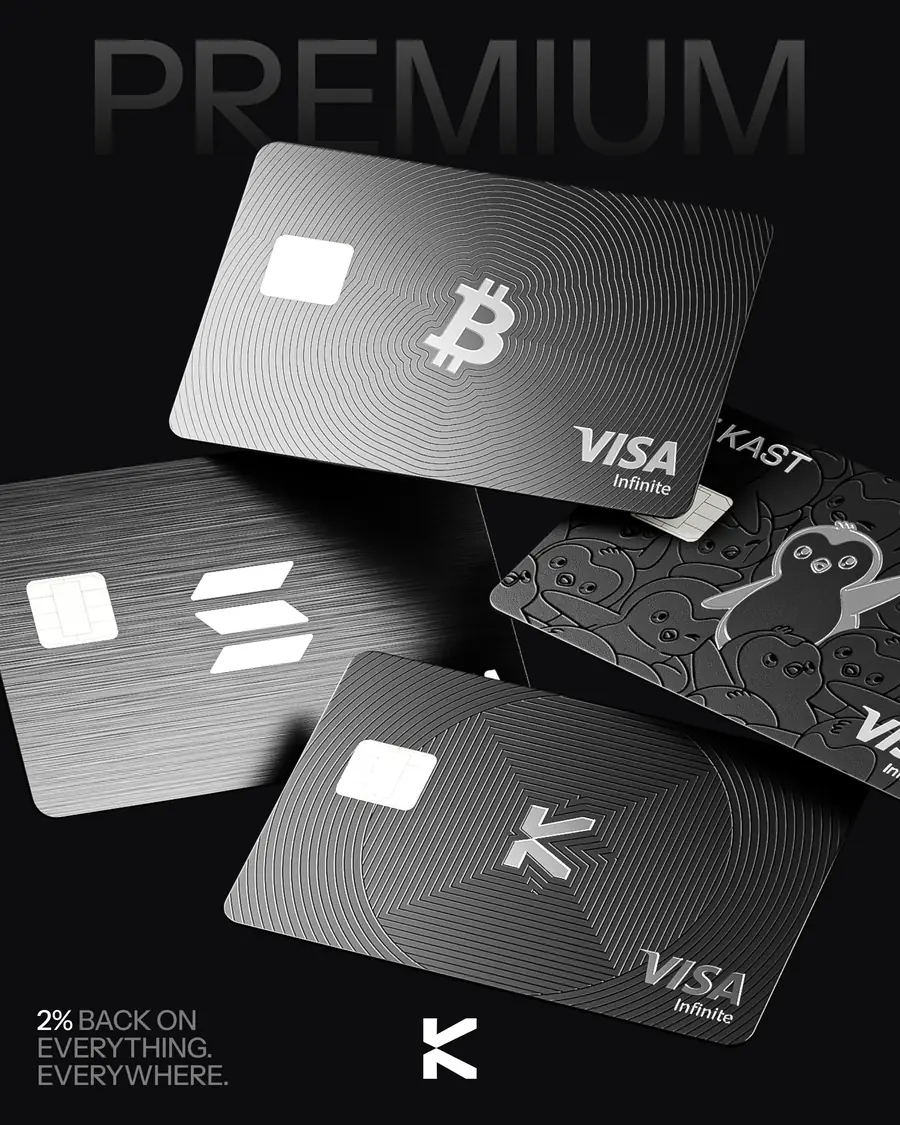
Base cashback follows your membership tier, whichever card design you pick. All three tiers pay it in USD, and the two paid ones add KAST Points. All in, Kast Card cashback goes up to 8%.
| Standard | Premium | Private | |
|---|---|---|---|
| Annual fee | Free | $1,000 | $10,000 |
| Base cashback | 1.5% | 2% | 3% |
| Cashback | up to 8% | ||
| Cashback applies to | first $2,000 a month | first $10,000 a month | first $40,000 a month |
| KAST Points | None | about 1% of spend | about 2% of spend |
| Visa program | Platinum | Infinite | Infinite |
| Cards included | 2 free cards | Premium card + Standard allowance | Plated gold card + 2 cards from any tier |
Look at the caps before the percentages. Standard stops paying at $2,000 of spend, so the most it can earn is $30 a month, or $360 a year. Premium only beats that once you put about $5,700 a month through the card. Private needs roughly $32,000 a month before it overtakes Premium. None of this counts KAST Points, which have no fixed cash value. Right now you can trade them in for a membership: 25,000 points for Premium, 250,000 for Private.
We would start on Standard and upgrade once your actual monthly spending clears the break-even.
KAST's marketing page says there are no monthly caps, while its help articles list the caps above. We use the caps, so treat these numbers as the conservative case.
KAST Card fees and limits
Holding and topping up a balance costs very little. The fees come from currency conversion, cash withdrawals and the physical card.
| What | Cost |
|---|---|
| Stablecoin deposits | 0% from KAST; you pay network gas only |
| Other coins (BTC, ETH, SOL…) | Converted automatically, usually 2–5% or more, shown before you confirm |
| Spending in USD | No FX fee |
| Spending in other currencies | 0.5%–1.75%, plus $0.10 on purchases under $25 |
| ATM withdrawal | $3 + 2%; max $250 each, 3 withdrawals or $750 per 24 hours, plus any ATM owner fee |
| Physical card | Free on Standard with $40 shipping; included with Premium and Private |
| Virtual cards | Free and unlimited |
| Spending limit | None beyond your balance (very large payments may get a compliance check) |
If you mostly pay in dollars and rarely touch an ATM, KAST is cheap to run. If you withdraw cash every week or spend in several currencies, do the FX and ATM maths before you get excited about cashback. Our Kast Card fees page lists every fee, including withdrawals and bank payouts, with a cost calculator.
How to deposit USDT and USDC to KAST
Deposits arrive on-chain, so the network you send on has to match the network of your deposit address. Get that wrong and the money can be gone for good, with KAST or any other card.
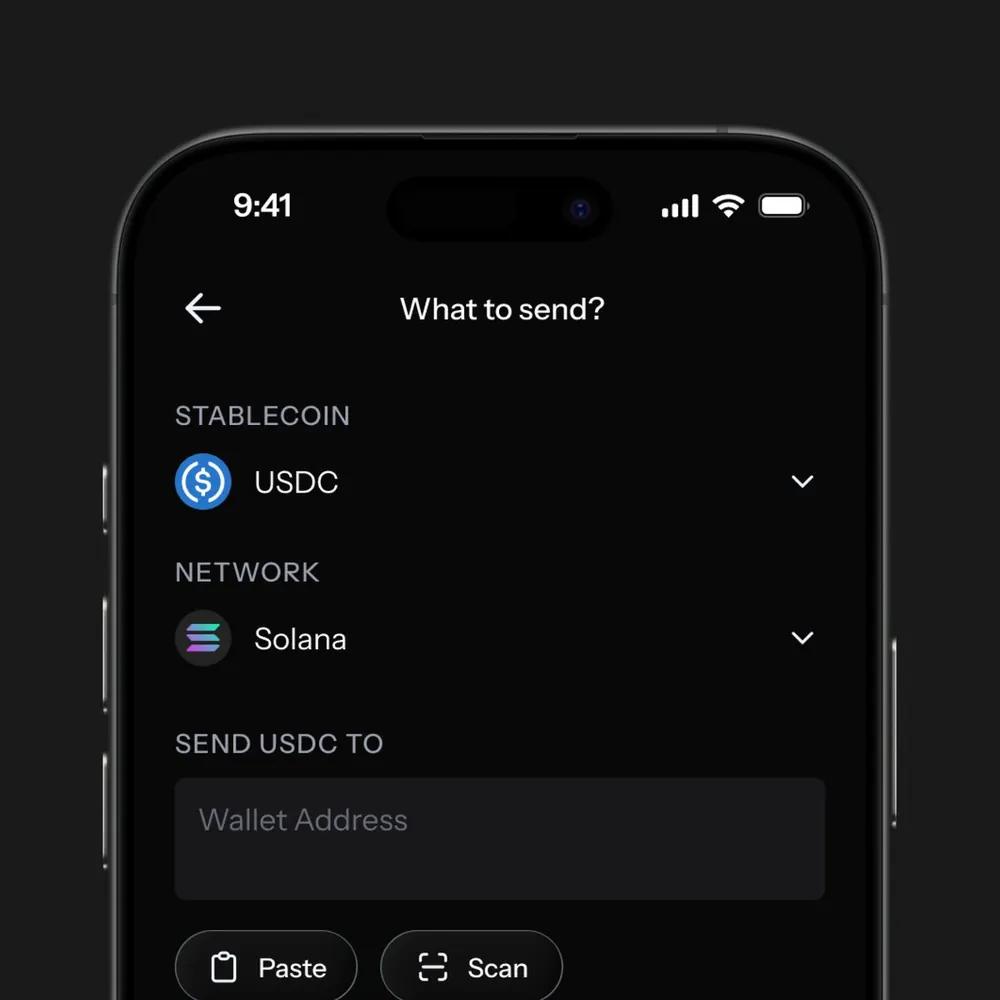
USDT can go in on Ethereum, TRON, Solana, Polygon, Arbitrum, BNB Chain, Avalanche C-Chain and TON. USDC works on Ethereum, Solana, Polygon, Arbitrum, Base, Optimism, Avalanche C-Chain, Stellar and Sonic. PYUSD is accepted on Ethereum and Solana, and RLUSD on Ethereum and the XRP Ledger.
Solana deposits usually land in under a minute; our Kast Solana Card guide covers funding from Phantom, spending SOL and the staking bonus. Ethereum can take 5 to 10 minutes, longer when the network is busy. For USDT, TRON and Solana are normally the cheapest routes. Bank transfers into the USD account take 1 to 5 business days, and the app shows any minimum deposit when it generates your address.
KAST Card sign-up and KYC: how long it takes
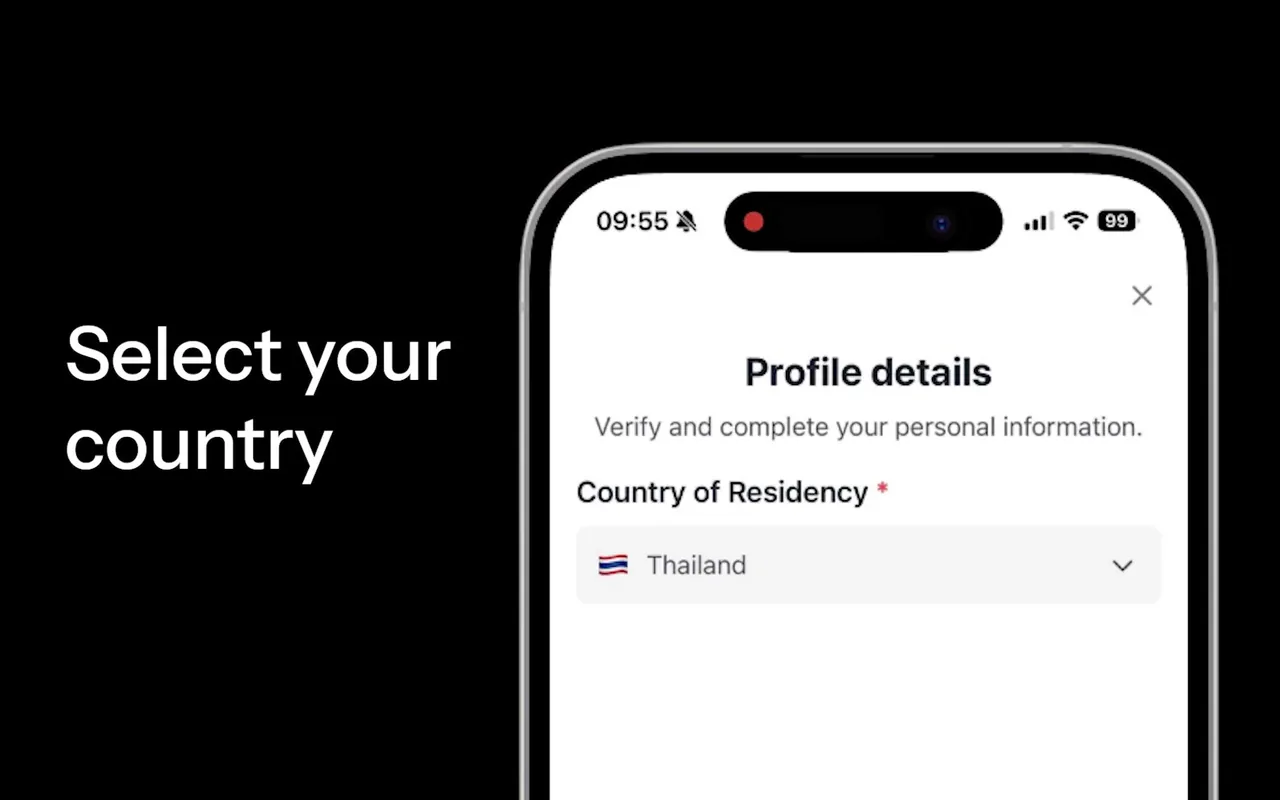
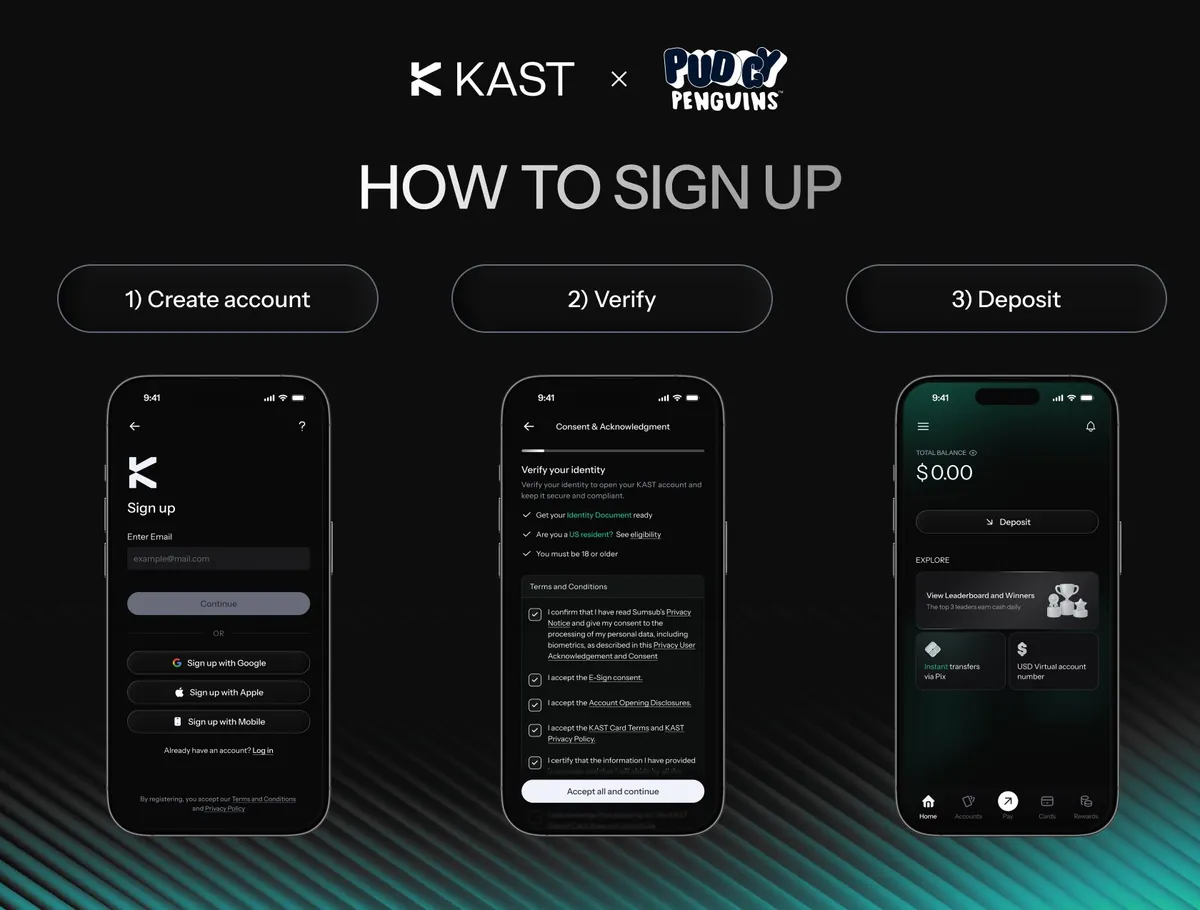
- Install the KAST app from the referral link and register with your email.
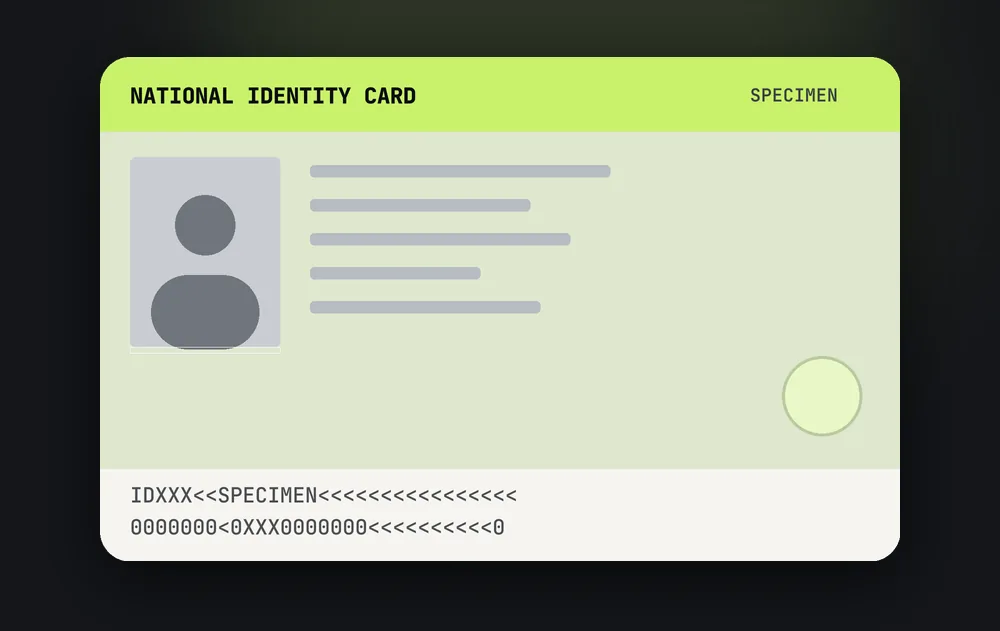
- Verify your identity with a passport, national ID or driving licence plus a live selfie, as our Kast Card KYC page shows screen by screen. Some features ask for proof of address later, dated within the last three months.
- Wait for approval. Automated checks usually take 5 to 15 minutes. If yours goes to manual review, expect 1 to 3 business days.
- Start using the virtual card in Apple Pay or Google Pay, and order a physical card if you want one. It takes 7 to 10 business days to arrive in most places, up to 21 for international delivery.
Each of those screens, from the first tap to the first deposit, is shown on our Kast Card sign up page.
KAST referral code: what new users get
Sign up with code 6MHGEMGE and you get two extras on top of the free account: $20 in USD once you have spent your first $100 on the card, and 10% off your first paid membership, which is $100 off Premium or $1,000 off Private.
You don't have to type anything if you sign up through the referral link, because the code is applied for you. If you already have an account, add it under Profile → Account → Referred by, before you hit the spending milestones. The bonuses unlock after ID verification, can differ by country, and show up in the app's Rewards tab.
Our KAST referral code page covers every version of the code (invite, coupon, promo and unlock code) and the referral campaigns KAST has run, and our Kast Card discount code page explains discount, coupon and card unlock codes.
The "up to $250" figure that some sites put next to KAST referral codes is what the person who invited you can earn, and new users do not get it.
KAST Card supported countries
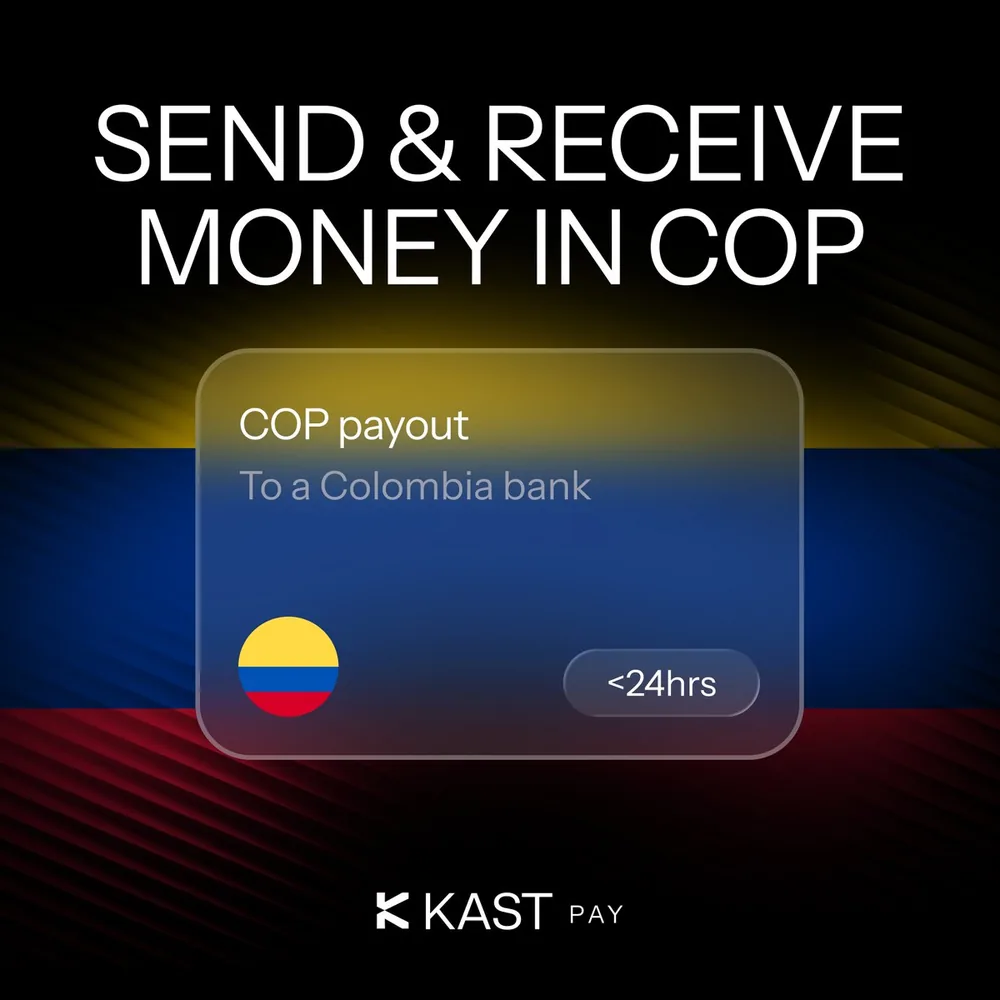
KAST says the card works in more than 170 countries. Eligibility comes down to the country list at sign-up: if yours is there, you can apply. Sanctioned countries such as Russia, North Korea, Iran, Syria and Cuba are excluded, and getting around that with a VPN is a quick way to have the account closed. Indonesia, the UAE, Brazil, Mexico, Argentina, Colombia, Turkey and South Korea are supported, for example: our Kast Card Indonesia, Kast Card UAE, Kast Card Brazil, Kast Card Mexico, Kast Card Argentina, Kast Card Colombia, Kast Card Turkey and Kast Card South Korea pages cover sign-up, paying in the local currency and cashing out. The full list is on our Kast Card supported countries page. Whatever your country, check the country selector before you deposit anything.

Is KAST safe and legit?
KAST is a financial technology company, and its card runs on a licensed Visa program. It is still not a bank. Your balance has no deposit insurance, so think of it like money sitting in an exchange or a payment app.
The card controls are good. You can freeze the card in two taps, set your own limits and get a notification for every payment. The weak spot is support. KAST's App Store rating sits around 4 stars, and the bad reviews are mostly about accounts paused for review and replies that take too long. We would keep a few weeks of spending money somewhere else, just in case.
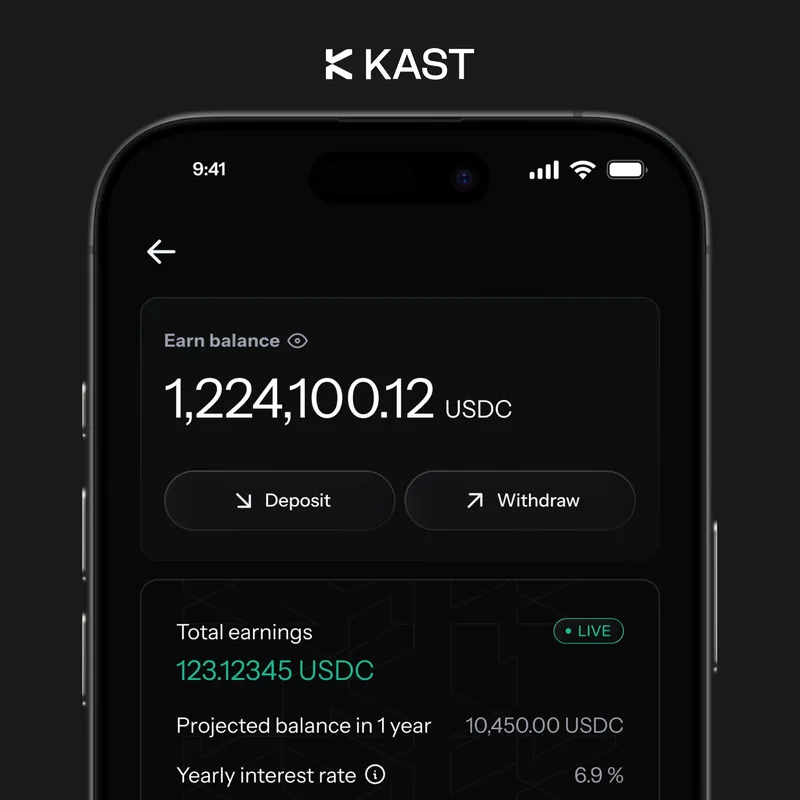
KAST also has Reserve, which pays rewards on money you leave in the app. The rates are introductory, and KAST's pages don't agree on what happens after, so we wouldn't move money in for the yield alone.
KAST Card pros and cons
Verdict: is the KAST Card worth it?
If you already earn or hold stablecoins and want to spend them like a normal Visa card, KAST is one of the simplest options out there. The Standard tier is free, so trying it costs nothing. Sign up with the referral code, collect the $20 after your first $100, and run a normal month of spending through the card. Only then look at Premium or Private, and only if the numbers clear the break-even. The fees to watch are on cash withdrawals and anything not priced in dollars.
This article is for information only and is not financial advice. This site is independent and not operated by KAST. Figures from KAST's website and help articles, checked Oct 2026. Images: KAST on X.